
 EN
EN
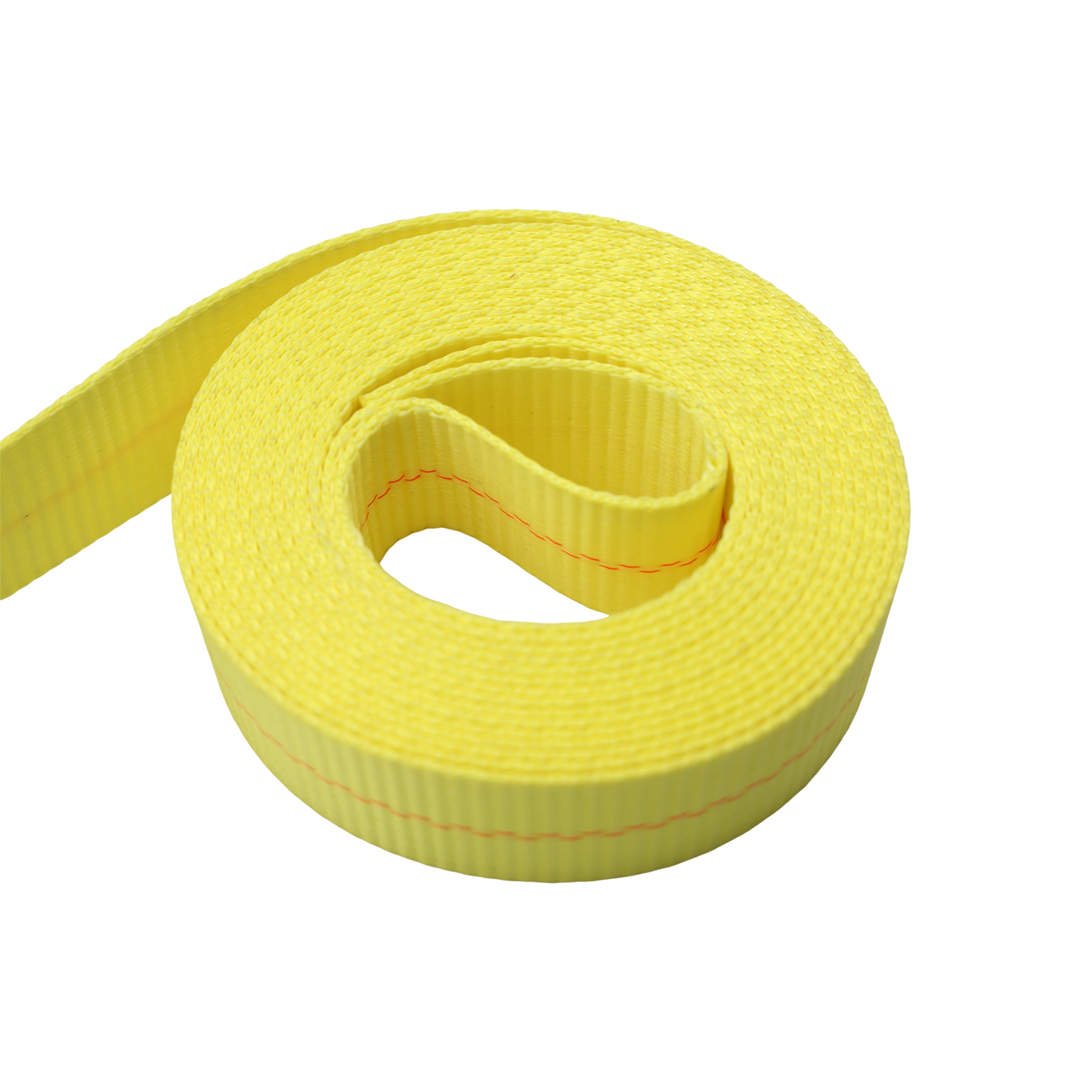
Choosing the right webbing for outdoor gear is a decision that directly affects performance, safety, and longevity. Whether you are assembling climbing harnesses, securing cargo, building backpack straps, or rigging tents, the type of webbing you select determines how well your gear holds up under real-world stress. Two materials dominate this space: polyester webbing and nylon webbing. Both offer impressive tensile strength and broad compatibility with hardware, yet they behave very differently when exposed to moisture, UV radiation, heat, and repeated mechanical loading. Understanding those differences is essential before committing to either material for your outdoor application.
This article breaks down the key performance characteristics of each webbing type, examines the scenarios where one outperforms the other, and gives you a clear framework for selecting the right webbing before your next project or purchase. The goal is not to declare one universally superior, but to match the right webbing to the right conditions. Both polyester webbing and nylon webbing have earned their place in outdoor and industrial applications, and knowing their strengths will help you make the most informed decision possible.
Material Properties That Define Webbing Performance
Polyester Webbing: Dimensional Stability Under Stress
Polyester webbing is widely recognized for its low stretch characteristics and excellent resistance to UV degradation. When a load is applied, polyester webbing maintains its dimensions with minimal elongation, typically stretching only one to two percent before reaching its working load limit. This predictable behavior makes polyester webbing a preferred choice for load-securing applications, lashing straps, and any outdoor scenario where consistent tension is critical. The webbing does not sag or loosen after repeated use cycles, which is a significant advantage when reliable retention is required over extended periods.
Moisture absorption is another area where polyester webbing excels. Polyester webbing absorbs very little water, which means it retains close to its full dry-state strength even when wet. It also dries quickly, resisting mildew and mold growth in humid or rainy conditions. For outdoor gear that will be exposed to rain, river crossings, or coastal salt air, polyester webbing offers a performance consistency that nylon webbing cannot match in wet environments. The webbing stays dimensionally stable and maintains its grip on hardware buckles even after prolonged exposure to water.
Nylon Webbing: Shock Absorption and Flexibility
Nylon webbing takes a different approach to performance. It stretches more under load, typically absorbing energy dynamically before reaching its breaking strength. This elasticity makes nylon webbing highly effective in applications that involve sudden impact loads, such as fall arrest systems, dog leashes, and dynamic climbing applications where shock absorption reduces peak force on anchor points. The webbing acts as a buffer, distributing energy over time rather than transferring it instantly to connected hardware or the human body.
Nylon webbing also tends to feel softer and more pliable than polyester webbing of the same width and thickness. This tactile quality makes nylon webbing comfortable in direct contact with skin, which is why it appears frequently in harness straps, seatbelts, and wearable gear. However, nylon webbing absorbs significantly more moisture than polyester webbing. When wet, nylon webbing can lose up to fifteen percent of its rated tensile strength, and it takes considerably longer to dry. This is an important trade-off to factor into any outdoor gear selection process where wet conditions are expected regularly.
Application Scenarios Where Each Webbing Type Wins
When Polyester Webbing Outperforms
Polyester webbing consistently outperforms in cargo control, flatbed tie-down systems, and UV-exposed outdoor installations. Because polyester webbing resists UV rays far better than nylon webbing, it maintains its structural integrity over multiple seasons without significant color fading or fiber degradation. For permanent or semi-permanent outdoor installations such as hammock suspension systems, awning tie-downs, and equipment lashing, polyester webbing is the smarter investment. Its dimensional stability also makes it more compatible with ratchet straps and cam buckles, where consistent webbing width ensures reliable mechanism engagement.
In industrial lifting and rigging, a webbing sling made from polyester material is the standard recommendation for lifting loads that must be protected from chemical exposure, acids, or bleaching agents. Polyester webbing resists a wider range of chemicals than nylon webbing, making it suitable for use in agricultural, marine, and manufacturing environments where contamination is possible. The webbing also holds its shape after repeated loading cycles, extending service life and reducing replacement frequency compared to nylon webbing in these demanding contexts.
When Nylon Webbing Outperforms
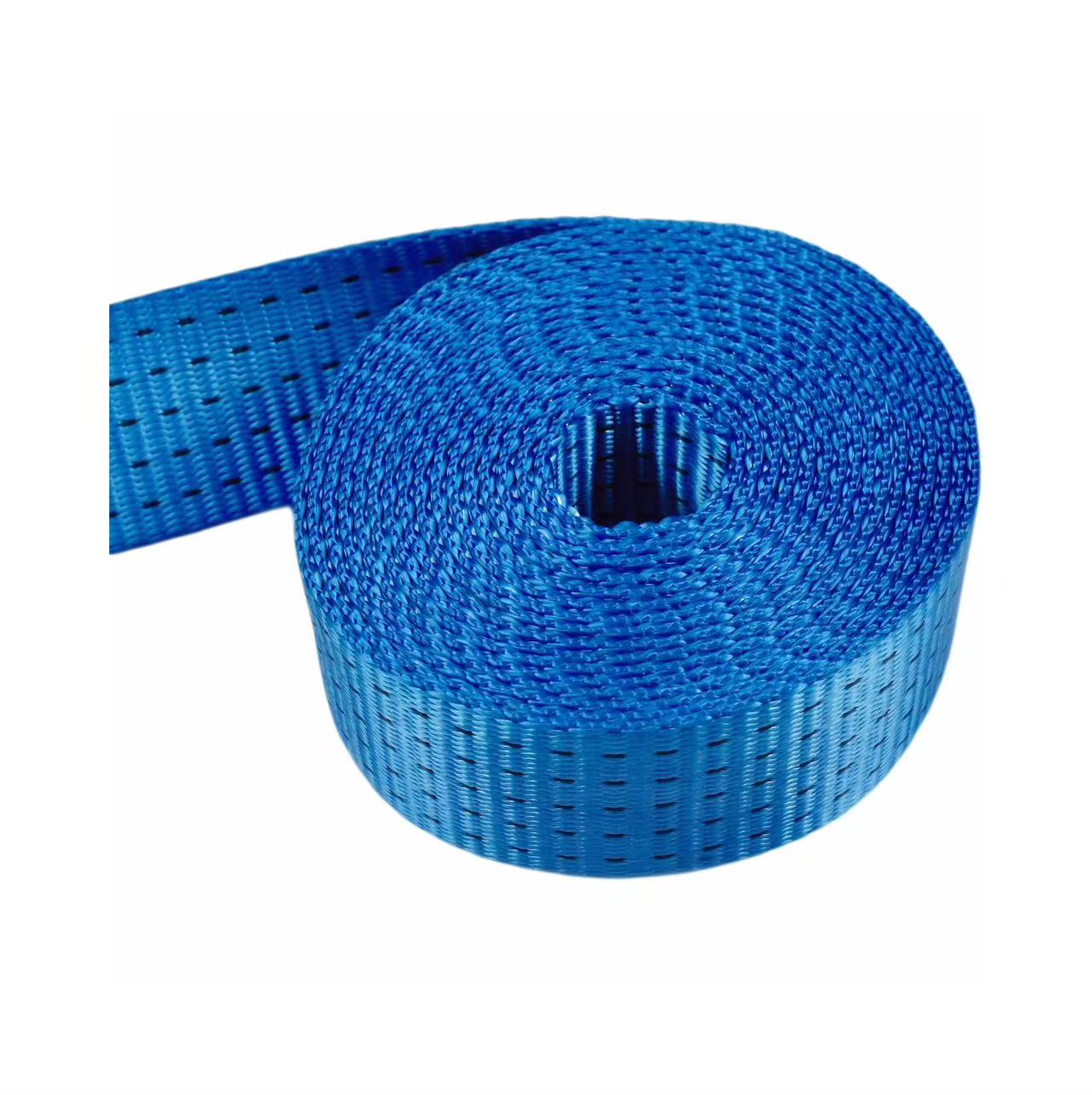
Nylon webbing outperforms in applications that demand energy absorption and softness. Climbing gear that must handle dynamic fall forces benefits from the stretch properties of nylon webbing, which reduces the force transferred to the climber and anchor. Pet leashes, harnesses, and restraint systems where comfort and flexibility matter are traditionally built with nylon webbing because the material conforms more naturally to body contours. Nylon webbing also tends to have a higher abrasion resistance in dry conditions compared to polyester webbing of equivalent denier, making it well-suited for gear that experiences friction during daily use.
Nylon webbing is also frequently chosen for military and tactical gear, where webbing must withstand extreme mechanical stress across a wide temperature range. The inherent flexibility of nylon webbing improves handling in cold climates where polyester webbing can become stiffer. For applications in cold, dry environments where moisture absorption is not a frequent concern, nylon webbing provides a balanced combination of strength, flexibility, and durability that keeps it highly competitive against polyester webbing.
Selecting the Right Webbing for Your Outdoor Project
Key Factors to Evaluate Before Choosing Webbing
When selecting webbing for outdoor gear, four factors should drive your decision: moisture exposure, UV exposure, required elongation behavior, and load type. If your gear will be wet frequently or stored outdoors in direct sunlight, polyester webbing is the safer and more durable choice. The webbing will maintain its strength rating and resist UV-induced fiber breakdown far longer than nylon webbing in those conditions. If your application involves dynamic or shock loading, such as in safety harnesses or fall protection, nylon webbing offers a mechanical advantage through its energy-absorbing stretch.
Width and thickness of the webbing also matter when fitting hardware. Both polyester webbing and nylon webbing are available in standard widths from 12mm to 75mm, but nylon webbing may feel slightly bulkier after water absorption, affecting buckle fit temporarily. Always verify hardware compatibility for the specific webbing material and width you select. Testing the webbing under representative load conditions before full deployment is a professional best practice that protects both equipment and personnel.
Practical Tips for Webbing Maintenance and Inspection
Regardless of which webbing type you choose, regular inspection is non-negotiable. Inspect the webbing for cuts, abrasions, chemical staining, UV bleaching, and any signs of fiber distortion before each use. Polyester webbing that shows fraying at load-bearing edges should be retired immediately. Nylon webbing that appears chalky, discolored, or has reduced elasticity relative to its original feel should also be removed from service. Proper storage of webbing in a cool, dry, and UV-protected environment extends service life for both materials and preserves the load ratings that your gear depends on.
FAQ
Is polyester webbing stronger than nylon webbing?
Not necessarily in terms of raw tensile strength. Both webbing materials can be manufactured to similar breaking strength ratings. The key difference is that polyester webbing maintains more of its strength when wet, while nylon webbing loses a portion of its rated strength after water absorption. For wet environments, polyester webbing effectively delivers higher usable strength under load.
Can I use nylon webbing and polyester webbing interchangeably?
In some applications, yes, but you should always match the webbing type to the specific performance requirements of your gear. Substituting nylon webbing for polyester webbing in UV-heavy or wet environments will reduce service life. Substituting polyester webbing for nylon webbing in dynamic load applications may result in higher peak shock forces. Always evaluate the webbing selection based on the actual conditions your gear will face.
How do I identify polyester webbing from nylon webbing?
A simple burn test can help distinguish the two webbing materials. Polyester webbing melts and forms a hard, dark bead when burned, with little odor. Nylon webbing also melts but produces a softer bead and a faint celery-like smell. Visually, nylon webbing often has a slightly shinier appearance, while polyester webbing tends to have a more matte finish. When in doubt, always check the manufacturer label or product specification sheet for the correct webbing material identification.
