
 EN
EN
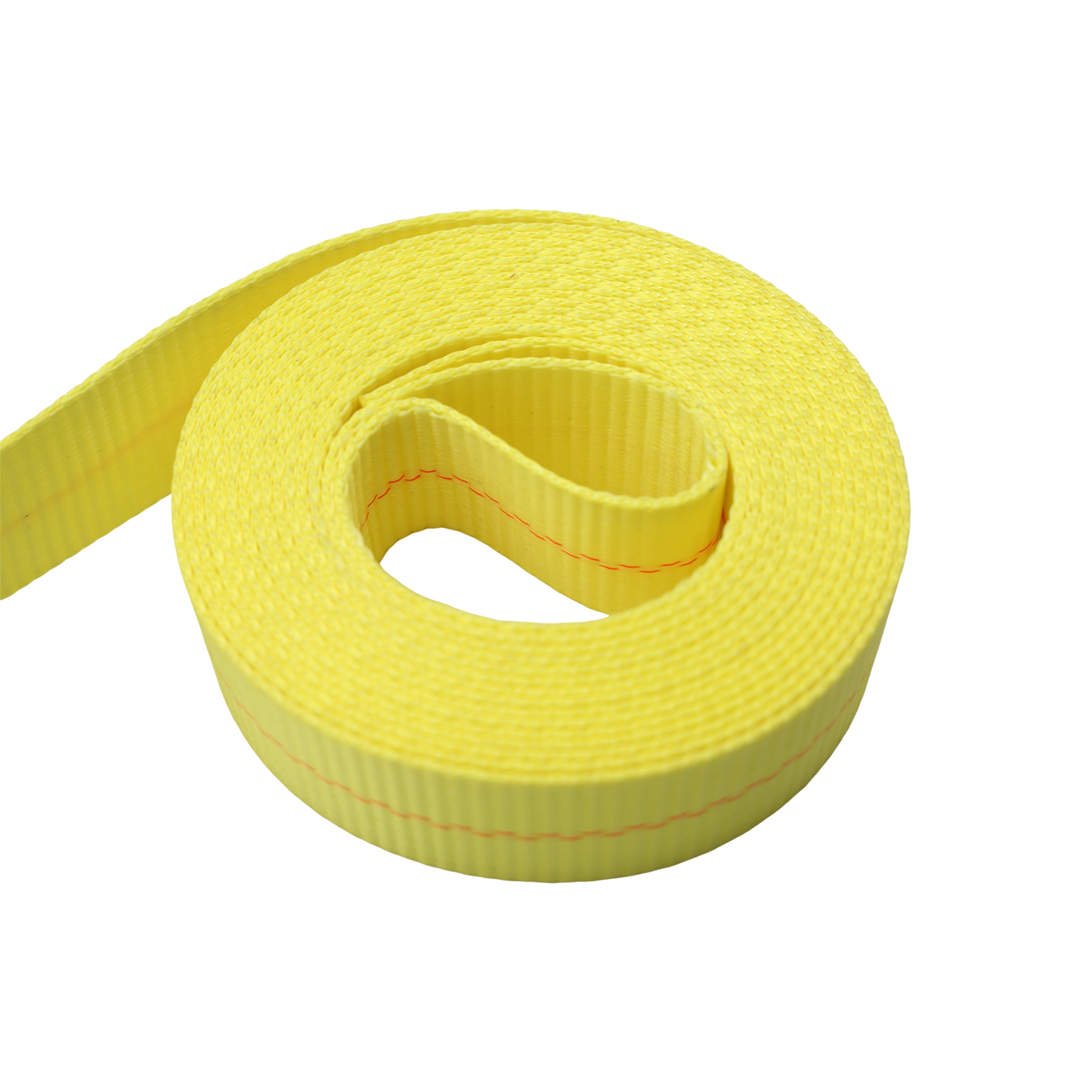
In construction environments where lifting, securing, and load control are daily necessities, the choice between traditional metal chains and modern textile solutions has become a meaningful operational decision. Heavy-duty webbing has steadily gained ground as a legitimate alternative to metal chains, offering a combination of flexibility, weight savings, and surface protection that chains simply cannot match in certain scenarios. But the question is not just whether webbing can perform — it is whether it can perform well enough to replace metal chains across the demanding and varied conditions found on active construction sites.

The answer is nuanced. In many construction applications, heavy-duty webbing not only matches the performance of metal chains but actually delivers superior results. However, there are specific scenarios where chains remain the more appropriate tool. Understanding where webbing excels, where its limitations apply, and how construction professionals can make the right choice requires a closer look at load capacity, material behavior, environmental exposure, and industry compliance standards. This article provides that analysis in full.
Understanding Heavy-Duty Webbing in Construction Contexts
What Makes Webbing 'Heavy-Duty'
Not all webbing is engineered for construction-grade demands. Heavy-duty webbing is typically manufactured from high-tenacity polyester fibers woven into flat or tubular configurations capable of sustaining loads measured in tonnes. The weave density, fiber count, and edge finishing all contribute to how the webbing performs under tension, shock loading, and sustained stress. Industrial-grade webbing used in construction lifting slings, for example, must comply with strict regulatory standards and carry clearly marked working load limits.
The defining characteristic of heavy-duty webbing in construction is its engineered load rating, which can range from one tonne to well over ten tonnes depending on the sling width, configuration, and construction method. Flat webbing slings, in particular, are widely used for lifting precast concrete panels, steel beams, and structural components on active job sites. This load capacity directly competes with many chain sling configurations used for equivalent tasks. The critical difference lies not in raw strength, but in how that strength is delivered and how the material interacts with the load being handled.
How Webbing Differs from Metal Chain in Structural Behavior
Metal chains transfer load through rigid, interlocking links that concentrate stress at contact points. When a chain wraps around a structural component, the pressure is applied through a narrow edge contact, which can gouge, scratch, or even deform the surface of softer materials. Webbing, by contrast, distributes load across its full contact width, spreading pressure over a broader surface area and dramatically reducing the risk of surface damage to the load being handled.
This difference in load distribution has real consequences on construction sites where finished surfaces, coated structural elements, or precision-machined components are being lifted or secured. A metal chain may complete the task but leave permanent marks or stress concentrations in the material. Heavy-duty webbing accomplishes the same task while preserving surface integrity. From an engineering standpoint, this makes webbing the preferred choice wherever load protection and surface condition matter alongside raw lifting capacity.
Application Scenarios Where Webbing Outperforms Metal Chains
Lifting Sensitive or Finished Structural Components
On construction sites handling architectural precast elements, glass-fiber reinforced panels, or prefabricated modules with factory-applied finishes, the choice of lifting medium directly affects the final quality of the installed component. Metal chains are abrasive by nature, and no amount of padding consistently eliminates the risk of surface damage during crane lifts. Heavy-duty webbing slings make contact across their full flat width, acting as a natural buffer between the rigging hardware and the load surface.
Webbing also conforms slightly to irregular surfaces, which improves grip and reduces slippage during vertical lifts. This conforming behavior is particularly valuable when lifting curved or tapered structural components where a rigid chain might shift during the lift. The flexibility of webbing allows rigging teams to achieve stable, balanced lifts on complex shapes without resorting to custom rigging hardware. For construction operations that regularly handle diverse component geometries, webbing provides a versatile solution that chains physically cannot replicate.
Weight Advantages in Daily Rigging Operations
A comparable-rated metal chain assembly is significantly heavier than its webbing equivalent. For riggers who handle slings dozens of times per shift, this weight difference translates directly into reduced fatigue, faster rigging cycles, and improved on-site safety. Heavy-duty webbing slings can be coiled, folded, and stored compactly, making them far easier to transport between lift points across a busy construction site. The reduced handling burden also lowers the risk of dropped rigging hardware causing injuries at ground level.
Beyond individual lift operations, the cumulative logistical advantage of webbing over metal chains becomes significant at scale. Storage space in site containers and rigging bays is often limited, and webbing systems take a fraction of the volume that equivalent chain sets require. For project managers focused on site efficiency and labor productivity, this practical difference is as important as any technical load rating comparison. Webbing does not just match chains in capability — in many daily operational contexts, it actively improves workflow.
Conditions Where Metal Chains Maintain an Advantage
Extreme Heat and Spark Environments
Despite the many advantages of heavy-duty webbing, metal chains retain clear superiority in environments involving extreme heat, direct flame exposure, or molten material splatter. Polyester webbing, even industrial-grade, has a defined temperature tolerance threshold. Prolonged exposure to heat above recommended operating limits causes fiber degradation that is not always visible to the naked eye, creating a dangerous situation where the webbing appears serviceable but its load-bearing capacity has been compromised.
In construction scenarios involving welding operations, demolition with thermal cutting, or work adjacent to furnaces and heat sources, metal chains remain the correct specification. Webbing should never be used as a direct substitute in these contexts without verified heat-resistant protective sleeves rated for the operating temperature. When heat exposure is predictable and sustained, chains are simply the more reliable choice. Understanding these boundaries is essential for construction safety managers making rigging equipment decisions.
Abrasive Ground and Edge Contact Scenarios
Webbing is vulnerable to cutting and abrasion in ways that metal chains are not. When a webbing sling comes into contact with sharp steel edges, concrete rubble, or rough-cut structural steel, the textile fibers can be cut or worn through far more rapidly than a metal chain link would be affected by the same contact. Construction environments routinely create the exact conditions that compromise webbing integrity — sharp bolt heads, sheared plate edges, and rough concrete surfaces are everywhere.
This does not mean webbing cannot be used near sharp edges — edge protectors and corner guards are widely available and designed specifically to protect webbing in these situations. However, it does mean that webbing requires more active management of its operating environment than metal chains. Riggers and site supervisors must assess each lift point for edge hazards and apply protective measures proactively. When sharp-edge contact is unavoidable and protection cannot be reliably maintained throughout the lift, metal chains remain the safer specification.
Compliance, Inspection, and Service Life Considerations
Regulatory Standards Governing Webbing in Construction
Heavy-duty webbing used in lifting applications on construction sites is subject to the same regulatory framework that governs all lifting equipment. In most jurisdictions, webbing slings must carry permanent identification tags showing the working load limit, manufacturing date, material specification, and inspection history. Regular inspection intervals are mandated, and webbing showing signs of cuts, abrasion, UV degradation, chemical contamination, or load deformation must be removed from service immediately.
Metal chains are also subject to inspection requirements, but the inspection criteria differ. Chains are inspected for link deformation, wear, and stretch, while webbing is inspected for fiber damage, stitching integrity, and surface condition. Both materials can be maintained in compliant condition with disciplined inspection programs. The key point for construction safety managers is that webbing does not represent a regulatory shortcut or compromise — it is a fully recognized lifting medium within the existing compliance framework, provided it is specified, used, and maintained correctly.
Evaluating Service Life and Total Cost
A common misconception is that metal chains automatically outlast textile webbing in construction environments. In practice, service life depends heavily on how the equipment is used, stored, and maintained. Webbing that is properly protected from edge damage, UV exposure, and chemical contamination can deliver excellent service life with a predictable inspection and replacement cycle. Metal chains that are repeatedly shock-loaded, improperly stored, or allowed to corrode can fail prematurely and are far heavier to handle throughout their service life.
From a total cost perspective, webbing offers advantages beyond the initial purchase price. Lower weight reduces handling injuries and associated costs. Compact storage reduces site logistics overhead. Surface protection reduces rework costs on damaged components. When these factors are included in the cost analysis, heavy-duty webbing frequently delivers a better total cost outcome than equivalent metal chain systems, particularly for construction operations handling high volumes of finished or precision components where damage avoidance is a priority.
Making the Right Choice for Your Construction Operation
Assessing Load Type, Environment, and Risk Profile
The decision to use heavy-duty webbing instead of metal chains should be driven by a structured assessment of the specific loads, environments, and risk factors present in your construction operation. Webbing is the stronger choice for general lifting in controlled temperature environments, for handling finished or sensitive surfaces, and for operations where rigging speed and handling ergonomics are priorities. Metal chains are the stronger choice where heat, cutting hazards, or sustained abrasive conditions exist without reliable mitigation measures in place.
Many modern construction sites use both webbing and metal chains, selecting the appropriate medium for each application type rather than adopting a single universal solution. This hybrid approach allows operations to maximize the advantages of each material while avoiding the scenarios where each has defined limitations. A well-stocked rigging inventory will include quality webbing slings for the majority of general lifting tasks and a smaller inventory of rated chain slings for the specific high-temperature or abrasion-critical applications where chains remain the preferred choice.
Training and Awareness for Rigging Teams
The effectiveness of heavy-duty webbing in construction depends significantly on the knowledge and discipline of the teams using it. Riggers must understand the load ratings, inspection criteria, and environmental limitations of the webbing in their hands. They must recognize the visual signs of webbing damage — cuts, fraying, discoloration from chemical contact, and stitching failure — and know when to remove a sling from service. This knowledge level is not optional; it is a safety requirement that underpins the entire case for using webbing in high-stakes construction lifting.
Training programs for rigging teams should cover webbing selection, pre-use inspection, correct attachment techniques, edge protection application, and load limit verification. When rigging personnel are properly trained and equipped with quality webbing that meets the demands of the application, the performance gap between webbing and metal chains in appropriate scenarios closes entirely. In fact, many experienced construction riggers prefer webbing for day-to-day work precisely because its handling advantages make their work more efficient and less physically demanding without compromising safety.
FAQ
Is heavy-duty webbing strong enough for construction crane lifts?
Yes. Industrial webbing slings are manufactured and rated for lifting loads that commonly exceed several tonnes, making them fully suitable for many construction crane lift applications. The critical requirement is that the webbing selected carries the correct working load limit for the specific lift, is used in the correct configuration, and has been inspected and found to be in serviceable condition before use. Always verify the load rating marked on the webbing identification tag against the calculated lift weight before proceeding.
How do I protect webbing from sharp edges on construction sites?
Edge protectors, corner guards, and protective sleeves designed specifically for use with webbing are widely available and should be used whenever the webbing will contact sharp or abrasive surfaces during a lift. These protective devices prevent the textile fibers from being cut or worn through at the contact point. Riggers should inspect both the webbing and any protective devices before each use and replace worn or damaged protective components as a matter of routine maintenance.
Can webbing be used outdoors in all weather conditions?
High-quality polyester webbing has good resistance to moisture and is not significantly weakened by rain or wet conditions during normal use. However, prolonged UV exposure can degrade webbing fibers over time, reducing load capacity. Webbing should be stored away from direct sunlight when not in use, and slings showing signs of UV degradation — typically evidenced by discoloration and surface fiber breakdown — should be removed from service. Temperature extremes, particularly sustained high heat, also affect webbing performance and must be assessed against the manufacturer's operating range.
How often should construction webbing slings be inspected?
Webbing slings used in construction lifting operations should receive a pre-use visual inspection before every lift, checking for cuts, abrasion, chemical staining, discoloration, and stitching damage. In addition to these daily checks, a formal documented inspection by a competent person should be conducted at intervals specified by local regulatory requirements and the equipment manufacturer — typically at least annually, but more frequently in high-use or demanding environments. Any webbing sling that fails inspection criteria must be immediately removed from service and destroyed to prevent inadvertent reuse.
